
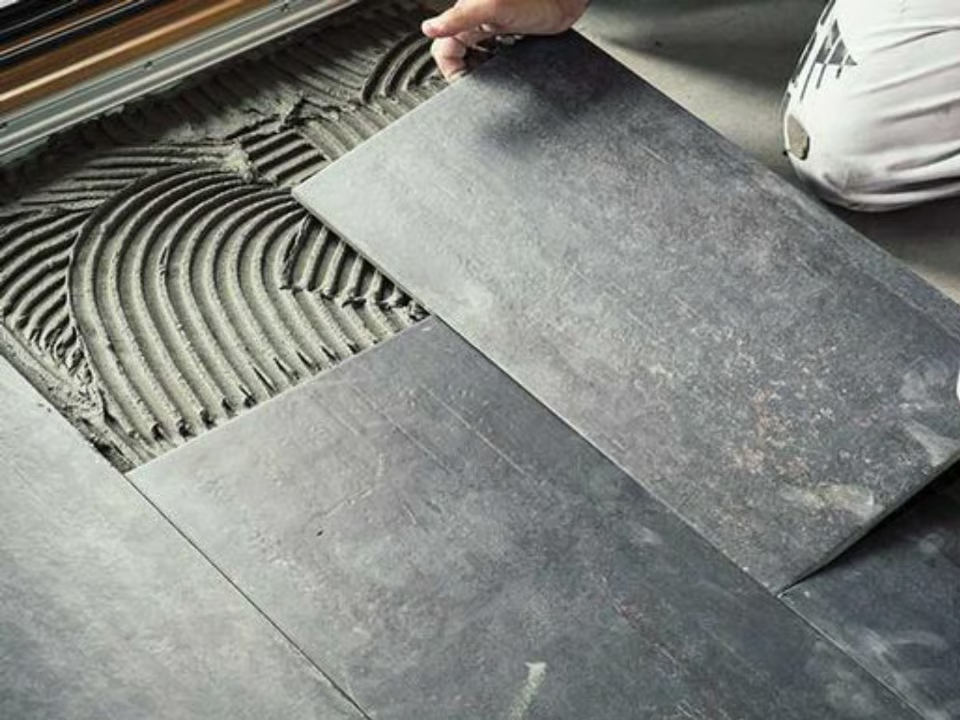
Wall & Floor Tiling
in Bexley, Bromley & Kent —
Pattern-Matched by Hand.
Large-format porcelain, mosaic, herringbone, marble and stone — set out from primary sight lines, cut with wet-saw precision, and grouted so every line runs true.
Wall & Floor Tiling — the honest overview.
What it is
Tiling is the finishing surface for bathrooms, kitchens, wet rooms, hallways and utility rooms — walls and floors alike. We tile as part of full installations and as a standalone service where the existing room just needs a new tiled surface.
Who it's for
Homeowners across Bexley, Bromley, Dartford and Kent who care about how a floor lands into a wall, how a feature tile lines up around a niche, and how grout lines look under raking light three years from now.
When you need it
Book tiling when your existing tiles are cracked, drumming, dated or badly-grouted — or as part of a full room installation where tiling is one of ten trades on the job.
Why professional matters
Tiling is one of the most visible finishes in a house and one of the easiest to get wrong. Bad setting-out, cheap adhesive and rushed grouting are visible from the doorway forever. Good tiling is invisible in the best way — you don't notice it because nothing pulls the eye off pattern.
The cost of doing nothing — or doing it cheaply.
Bad tiling is impossible to unsee once you spot it. And you always spot it eventually.
Risks & consequences
- Wrong substrate: gypsum board in wet zones, uneven screed under large-format porcelain — cracked tiles and blown grout within a year.
- Insufficient adhesive coverage — tiles drum, tiles crack, tiles come off.
- Grout mixed too wet or too dry — colour inconsistency, crumbling joints, mould that no cleaner beats.
- Silicone smeared with a wet finger instead of drawn with a knife — reads as unfinished from day one.
Common mistakes homeowners make
- Choosing tile before choosing setting-out — the pattern has to work with the room's key sight lines, not against them.
- Skipping tanking behind wet-zone tile because the tile is "waterproof" — grout isn't.
- Using standard adhesive on natural stone — staining and cracks appear before the second birthday.
Five steps. Fixed dates. Fixed prices.
-
01
Survey & Setting-Out
We plan the pattern on paper — where cuts fall, where feature lines run, where the room is read from. Nothing gets glued until setting-out is signed off.
-
02
Substrate Preparation
Boards checked, screeds tested for flatness, wet zones tanked. The substrate does 80% of the job.
-
03
Adhesive & Fixing
Correct adhesive for the tile and substrate. Full-coverage back-buttering for large-format. Spacers set consistently along every course.
-
04
Cutting & Detail Work
Wet-saw cutting for square edges, mitred external corners where the pattern calls for it, precision cuts around fixtures and niches.
-
05
Grout, Silicone & Handover
Grout colour-matched, mixed to spec, and finished cleanly. Silicone drawn against masked edges. Full inspection under raking light before sign-off.
Specific, measurable benefits.
Setting-out that works
Feature tiles centred on primary sight lines. Cuts fall in the least-visible corners.
Long-life substrate prep
Correct board, correct adhesive, correct grout — tiles that stay put, joints that don't blow.
Precision cuts
Wet-saw finishes on every edge. Mitres where mitres improve the look. Nothing chipped, nothing lippy.
Grout you don't notice
Colour-matched, evenly-toned, consistently sized joints. No dark patches, no crumble.
Silicone drawn, not smeared
Every internal corner and fixture-to-tile joint pulled clean with a knife.
Fixed written quote
You know the price per m² and the total before we start.
What actually goes into the work.
Tiling has three inputs — substrate, tile and grout. And a fourth: the person laying it. Here's the detail behind ours.
Large-format porcelain
600×600, 800×800 and 1200×600 formats need flatter substrates, more adhesive and more patience than small tiles. We back-butter every tile and use levelling clips on floors to eliminate lippage. Standard adhesive won't hold — we specify the right rapid-set flexible product for the size and substrate.
Mosaic and pattern tile
Mosaics are set out from primary sight lines with strict alignment across grout lines — miss it by 1mm and it's visible from the doorway. Pattern tiles (herringbone, chevron, hexagon) are laid dry first to confirm the pattern before adhesive goes down.
Natural stone
Marble, limestone, travertine and slate need porous-appropriate sealer applied before grouting to prevent staining. Adhesive must be non-staining and grout selected to match the stone's absorbency. We seal top-surface on completion and advise on ongoing care.
Wet-zone tiling
Behind baths, in showers and across wet-room floors: tanking membrane first, always. Grout selected for wet exposure — epoxy where movement or extreme wet call for it, cementitious with additive elsewhere.
External corners and edges
Mitred where the tile allows — 45° cuts butted for a seamless corner. Tile trim (Schlüter or similar) where mitres aren't practical, colour-matched to grout.
Silicone and finishing
Every internal corner and tile-to-fixture joint gets sanitary-grade neutral-cure silicone, drawn against masked edges with a proper tool. Cured for 24 hours before water contact.
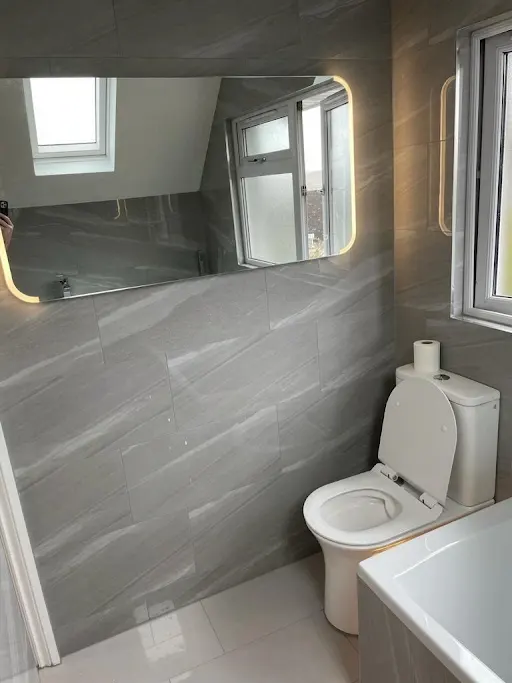
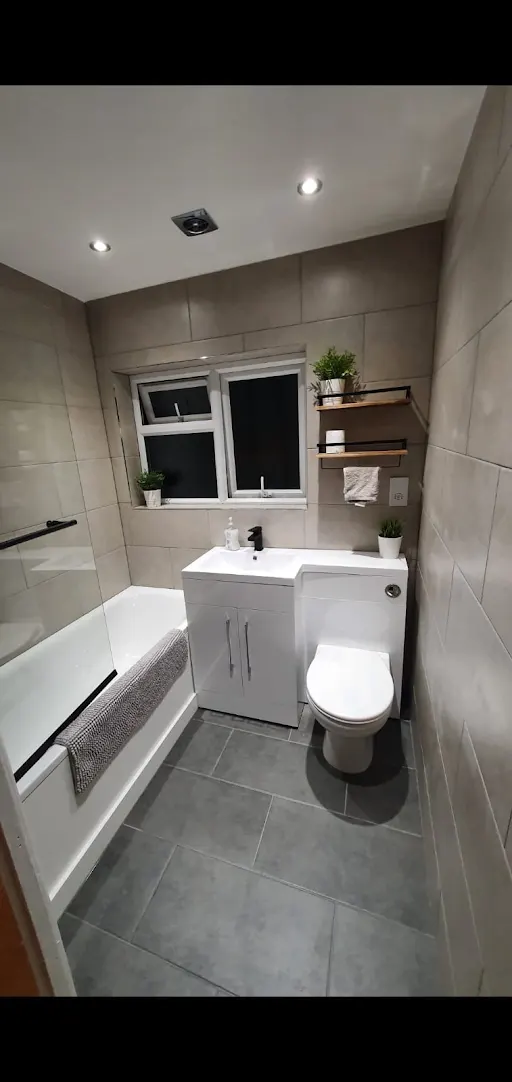
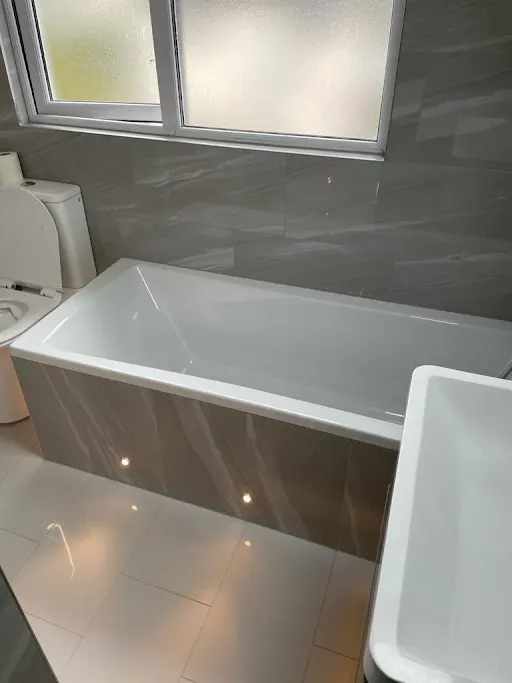
Wall & Floor Tiling — projects we've completed.
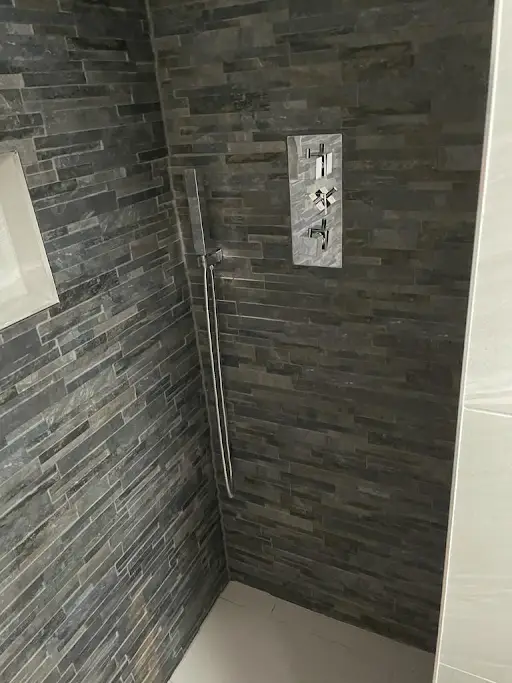
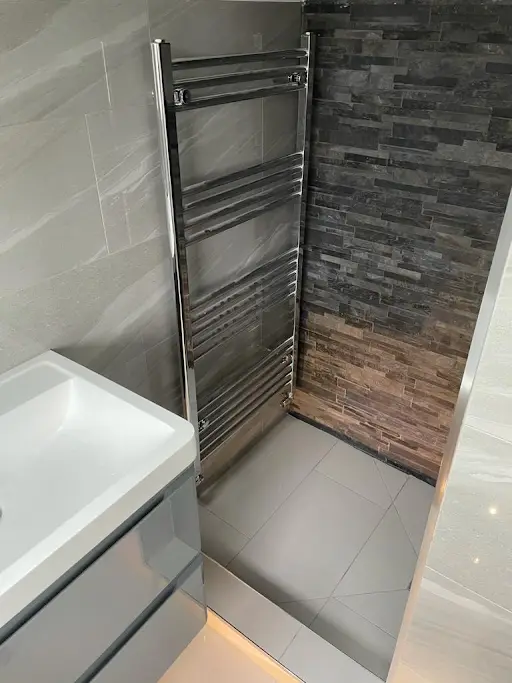
A selection of real jobs from across Bexley and the surrounding areas — finished by David and the team.
Answers before you ask.
Missing something? Call David direct on 07554 445184.
-
Yes — bathrooms, kitchens, hallways, utility rooms, wet rooms. Wall and floor tiling with equal attention to setting-out and cut quality.
Often combined with
Get tiling that reads clean from the doorway.
Free in-home survey. Fixed written quote. Workmanship guaranteed.